
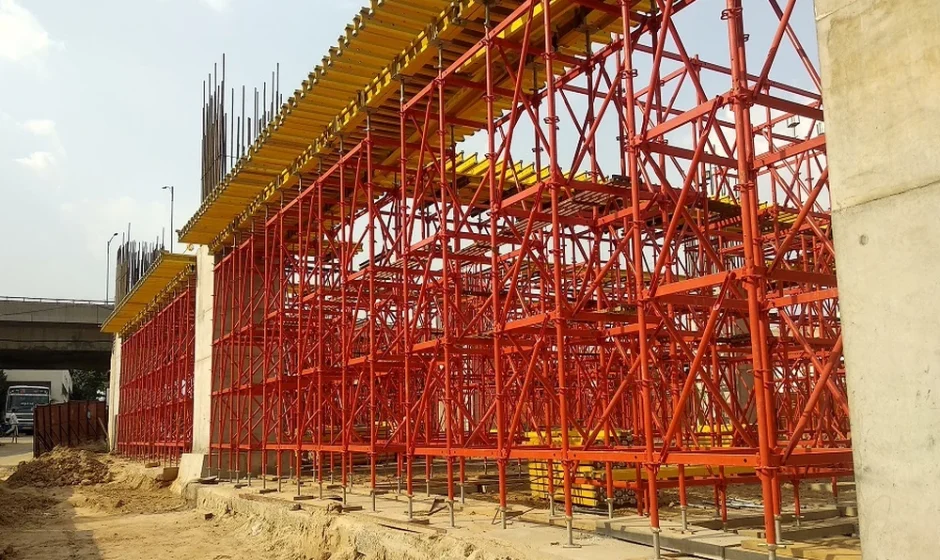

Steel bends, but it rarely breaks. That’s why it’s at the heart of a quiet revolution in construction: customized steel formwork now underpins some of the world’s boldest architectural feats, reshaping skylines and pushing the very boundaries of what concrete and imagination can achieve.
Advances in Customized Steel Formwork Technology
Evolution from Traditional to Customized Solutions
In decades past, wooden and modular aluminum formwork reigned supreme, valued for their low upfront cost and simplicity. But as clients and architects demanded more daring silhouettes, sweeping curves, cantilevered slabs, and faceted walls, these traditional molds began to show their limits. Enter customized steel formwork, a solution that adapts precisely to non-repetitive and challenging shapes, allowing architects to realize complex visions without compromise.
Materials and Coatings Enhancing Durability and Precision
Unlike timber, steel delivers both rigidity and adaptability. Advanced steel alloys resist deformation over multiple uses, even under intense loads. Modern coatings and galvanization techniques shield formwork from corrosion, extending its life and ensuring that repeated pours retain crisp details. This durability means that even for projects with multiple phases or repeated elements, the formwork stays precise, minimizing waste and rework.
Integration of Digital Design and BIM in Formwork Fabrication
Digital design tools and Building Information Modeling (BIM) have transformed the way custom formwork is developed. Detailed 3D models now drive fabrication directly, reducing errors and enabling increasingly complex forms. Instead of field adjustments and guesswork, digital blueprints provide clarity and coordination across teams. This shift sharpens accuracy, trims production timelines, and keeps even the most intricate layouts on track.
Engineering Challenges in Achieving Architectural Complexity
Designing for Non-Standard Geometries: Curves, Angles, and Voids
Each non-standard shape introduces a unique challenge. Whether it’s a curved facade, an angular overhang, or a sculptural void, custom steel formwork must conform without fail. Every angle and arc demands a tailored approach, marrying engineering skill with fabrication finesse to create molds that can both support fresh concrete and release it cleanly once set.
Load-Bearing and Structural Stability Considerations
Supporting ambitious designs requires more than just the right mold. Engineers must calculate load paths, shoring demands, and potential deflection, especially for multi-story pours and cantilevered structures. Missteps in these calculations can threaten safety and lead to costly delays, underscoring the need for careful structural analysis and partnership with vetted experts.
Temporary vs. Permanent Formwork: Balancing Functionality and Aesthetics
Not all formwork is destined for removal. In some projects, steel formwork becomes a permanent structural element, especially where architectural finishes or structural needs dictate. The challenge lies in balancing the functional robustness of steel with visual considerations, ensuring that exposed elements align with the project’s aesthetic vision.
Innovations Driving Efficiency and Flexibility on Site
Modular and Reconfigurable Steel Formwork Systems
The latest generation of steel formwork systems emphasizes modularity and reconfigurability. Panels and segments interlock quickly and securely, making it possible to adapt to evolving on-site requirements without lengthy delays. This modular approach reduces assembly time and limits the logistical headaches of large-scale projects.
Rapid Assembly and Disassembly Techniques
Efficiency on the jobsite matters. Innovations like quick-release clamps, lightweight panel designs, and integrated lifting points allow crews to assemble and dismantle formwork at unprecedented speeds. For contractors, this means faster cycle times, less labor, and ultimately lower costs.
Multi-Stage Shoring and Load Transfer Strategies for High-Rise and Complex Structures
High-rise and multi-stage pours introduce particular complexity. Sophisticated shoring solutions support sequential pours and ensure safe load transfer as construction climbs upward. Here, expertise from specialists, such as NadeauSDM ingénieur étaiement, proves invaluable in designing, analyzing, and implementing safe, efficient temporary works.
Case Studies: Pushing Boundaries with Customized Steel Formwork
Complex Commercial and Multi-Story Building Projects
Modern commercial towers and multi-family buildings increasingly feature irregular floor plates, staggered balconies, and decorative facades. Custom steel formwork has enabled the construction of these elements with precision, cutting down on adjustments and ensuring repeatability across numerous floors.
Bridges, Tunnels, and Infrastructure Featuring Specialized Formwork
Infrastructure projects like bridge abutments, tunnel linings, and piers often demand bespoke formwork to accommodate unique site conditions or architectural flourishes. Steel’s strength, coupled with custom fabrication, provides solutions for everything from circular columns to complex beam intersections.
Unique Architectural Features Enabled by Customized Steel Solutions
Think of sculpted rooflines, dramatic overhangs, or organically flowing walls. These features, once considered cost-prohibitive or simply unbuildable, now come to life thanks to advances in steel formwork, bringing architects’ boldest ideas firmly into the realm of reality.
Future Trends and Sustainability in Steel Formwork
Lightweight Composite-Steel Hybrids and Smart Materials
Material science is opening new doors. Composite hybrids that combine steel with lightweight polymers or fiber-reinforced materials offer reduced weight without sacrificing strength. These innovations make formwork easier to handle and can shrink the project’s overall carbon footprint.
Digital Twin Monitoring and Real-Time Structural Analysis
Real-time digital twin technology is making its mark, allowing teams to monitor stresses, movements, and wear on formwork during the pour. This data-driven approach can catch issues early and optimize both safety and performance in future projects.
Circular Economy Principles: Reuse, Recycling, and Lifecycle Optimization
Sustainability is coming to the fore. Reusable steel formwork, modular design for easy adaptation, and robust recycling programs are extending the lifespan of materials and reducing environmental impact. The next evolution in construction will not just be about what’s possible, but what’s responsible, delivering architecture that’s as sustainable as it is spectacular.
When steel formwork becomes both the canvas and the tool, the only real limit is imagination.