
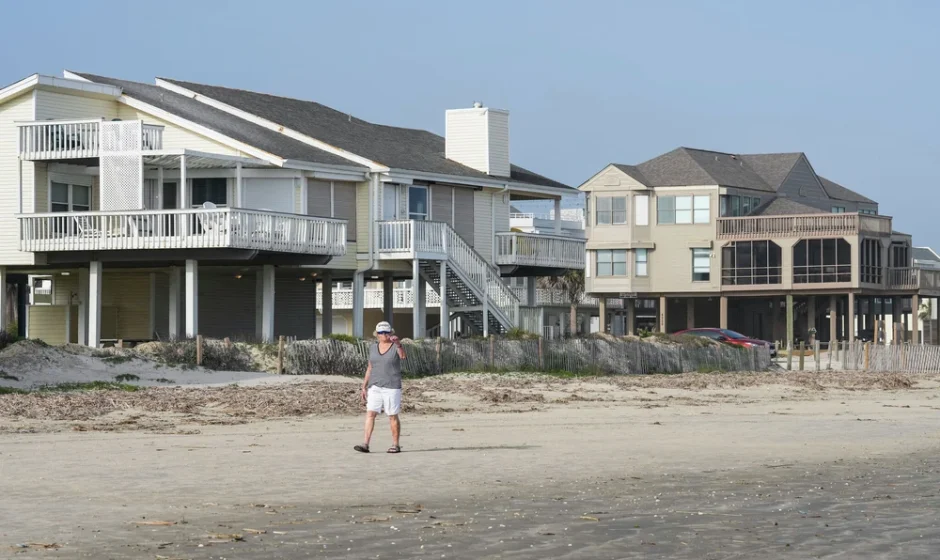

Galveston has always had the beach. What it now has is something harder to manufacture: a convergence of rising buyer interest, coastal charm, and a market with enough inventory that you can actually afford to be selective. That combination is drawing in a different kind of buyer, one who isn’t just chasing a vacation rental return but genuinely wants to understand what they’re walking into before they sign anything.
If you’re thinking about buying coastal property in Texas, Galveston Island deserves more than a casual glance.
A Market Built on More Than Beachfront Appeal
Galveston’s real estate profile has quietly shifted over the past few years. The island sits just 50 miles south of Houston, which means it attracts a consistent wave of buyers who want coastal access without giving up proximity to one of the country’s largest employment hubs. That geographic advantage has kept demand steadier here than in more remote beach markets.
Texas as a whole is an outlier in the national new construction story. Texas homebuyers were twice as likely as buyers nationwide to purchase a newly constructed home, with 30% opting for new construction, according to the 2025 Texas Homebuyers and Sellers Report. Galveston’s island geography caps new construction supply in ways that most inland Texas markets don’t experience, which puts a natural floor under existing inventory values. The Texas Real Estate Research Center at Texas A&M University, which publishes the state’s most reliable independent market data, tracks these supply constraints as a key variable in coastal submarket pricing forecasts.
What this means for you: buying in Galveston isn’t a bet on speculative appreciation. It’s a decision rooted in geography, access, and supply dynamics that don’t replicate easily.
The Title Complexity Behind Coastal Real Estate
Coastal property comes with a different category of paperwork risk than a suburban tract home. Easements for public beach access, overlapping flood zone designations, prior deed restrictions from historic neighborhoods, and ownership chains that stretch back to mid-1800s land grants are all features of Galveston’s title landscape, not anomalies.
This isn’t unique to Galveston, but it does show up more intensely here. Industry research published by the American Land Title Association in March 2026, covering 449 title professionals across 47 states, found that in purchase transactions, 61% of title professionals review 11 to 50 documents per file, while 21% review more than 50 documents. Coastal properties with layered easements and older ownership histories sit squarely in that heavier-document-load category.
“Producing an insurable title requires a deep dive into public records often spanning decades, including deeds, mortgages, liens, and probate filings.”
American Land Title Association, “Measuring the Complexity of Title Production,” March 2026
Before you get charmed by the view from a listing photo, the title history of that property has its own story. That story may be clean, or it may contain a lien from an estate that was never properly closed. You want to know which before the closing date is on the calendar.
Connecting with a real estate lawyer in Galveston TX early in the process, not at the last minute, is the difference between surfacing a problem when you still have options and surfacing it when the only option is delay.
What Buyers Actually Encounter at Closing
The closing process itself is longer and more layered than most first-time coastal buyers expect. Even in a straightforward transaction, you’re coordinating among a lender, a title company, inspectors, appraisers, and potentially a flood zone determination firm. Each one runs on its own independent schedule.
Galveston adds specific layers to that list. Flood zone classification matters enormously for insurance costs and, by extension, for the real economics of owning a property. A home sitting in FEMA’s AE flood zone will carry mandatory flood insurance requirements that can add hundreds or thousands of dollars annually to the cost of ownership. That number doesn’t show up on the listing sheet, and it can change your entire affordability calculation. Most buyers don’t discover this until an inspection or lender requirement forces the conversation.
Here’s a practical scenario: you make an offer on a beachside cottage listed at $385,000. The price looks manageable. You get to the lender underwriting phase and discover the property sits in a high-risk flood zone requiring a specific insurance policy that costs $4,200 per year. That number changes the monthly payment math, and if you hadn’t budgeted for it, it can also create a negotiating position with the seller. Knowing this before your inspection period expires is the entire ballgame.
The CLIP Framework for Coastal Property Decisions
Before making any coastal property offer in Galveston, run the decision through four filters. Think of this as the CLIP check:
- C – Coastal Restrictions: Confirm whether the property is subject to Open Beaches Act protections, which affect where you can build, what you can modify, and how public access easements are drawn.
- L – Lien and Title History: Request a preliminary title report before you’re emotionally committed. Older properties in Galveston’s historic districts often carry deed restrictions that predate modern zoning.
- I – Insurance Costs: Get a flood insurance quote as a non-negotiable step in your due diligence, before submitting an offer, not after.
- P – Professional Assembly: Identify your real estate attorney, inspector, and lender early. In a market where closing timelines run long due to title complexity and coastal-specific requirements, having all three aligned from the start keeps your timeline from compressing at the worst possible moment.
This framework won’t make the process painless. It will make sure you’re not surprised at the stage where surprises cost money.
A Practical Checklist Before You Make an Offer
| Step | What to Confirm | When to Do It |
|---|---|---|
| Flood Zone Check | FEMA flood zone classification and current insurance quotes | Before making an offer |
| Title Preliminary Report | Existing liens, easements, deed restrictions | Immediately after accepted offer |
| HOA and Transfer Fees | Any outstanding dues or transfer costs tied to the property | During due diligence period |
| Legal Review | Purchase agreement terms, contingency language, title issues | Before signing the purchase contract |
| Final Walkthrough | Property condition matches agreed-upon terms | 24 to 48 hours before closing |
Why Galveston Rewards the Prepared Buyer
Galveston Island is not a forgiving market for buyers who skip steps. But for the buyer who does the work upfront, assembles the right team early, and treats due diligence as part of the purchase rather than an afterthought, the island offers something genuinely rare on the Texas Gulf Coast: a walkable, historically rich coastal community with real economic anchors in tourism, the Port of Galveston, and the Texas Medical Center just up the highway.
The buyers who get into trouble are usually the ones who fell in love with the property before they understood it. The ones who thrive are the ones who ask uncomfortable questions during the inspection period rather than after closing. Galveston will still be there. The question is whether you’ve set yourself up to actually enjoy owning a piece of it.